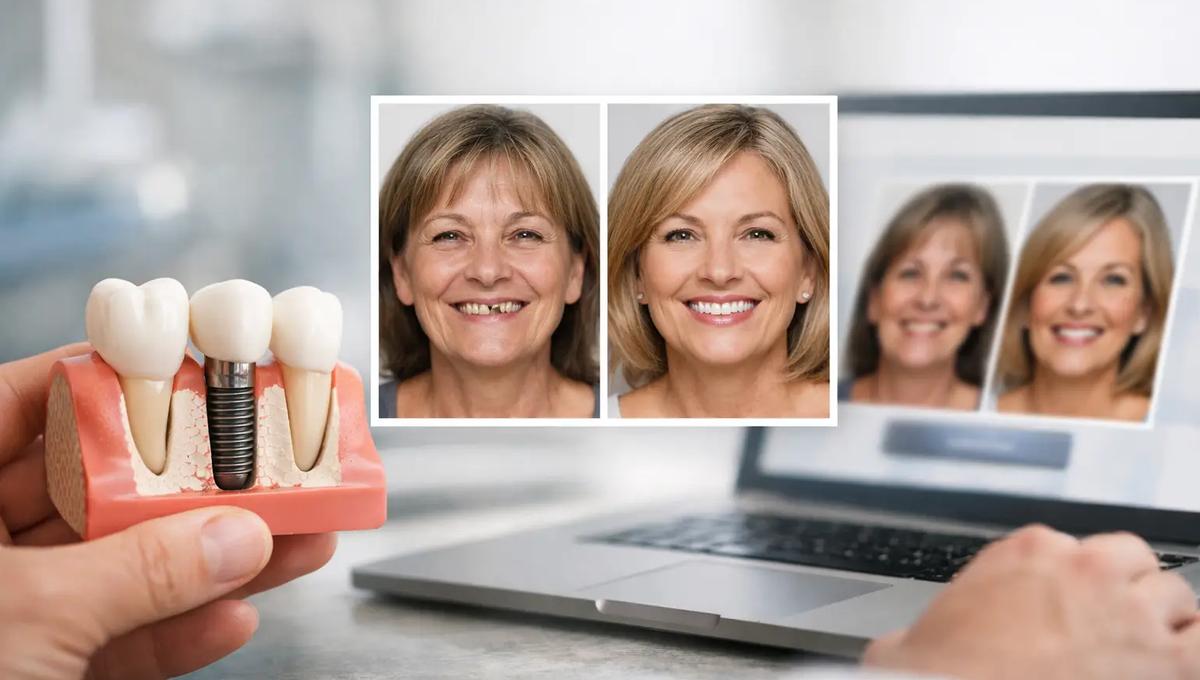
A single before-and-after image can do more for implant case acceptance than a page of copy - but only if the ad is built to sell the consult, not just show the result. That is the difference with implant ads with before after creative. The image gets attention. The structure of the ad decides whether that attention turns into a booked call.
Most implant clinics already have outcome photos. The problem is that many use them like a gallery, not like a conversion asset. They run generic smile transformations, add a weak headline, and hope high-value patients fill in the blanks. That usually leads to curiosity clicks, low-intent leads, or ad disapprovals. If you want qualified implant consults, the before-and-after element has to be handled with much more control.
Why implant ads with before after still work
Implant treatment is emotional and expensive. Patients are not buying a commodity. They are trying to solve a visible, personal problem that affects confidence, comfort, speech, and social life. Before-and-after creative works because it compresses the promise into a format people understand instantly.
A good transformation image answers the first question in a prospect's mind: can this clinic help someone like me? That matters more in implants than in many other dental services because the patient often feels embarrassed, skeptical, or overwhelmed before they ever inquire.
But performance depends on context. A dramatic transformation can increase click-through rate while hurting lead quality if the rest of the ad attracts the wrong audience. For example, a cosmetic-looking smile result may pull in veneer interest instead of full-arch or implant candidates. A cleaner, more treatment-specific visual may generate fewer clicks but more qualified consultations. That trade-off matters.
What makes implant ads with before after convert
The best-performing ads do not rely on the image alone. They pair proof with a clear offer, clear patient fit, and a low-friction next step.
The image has to match the case you want
If you want single implant consults, use a believable case that reflects that problem. If you want full-arch or All-on-X patients, the creative should signal a larger transformation. Too many clinics use their most dramatic smile photo for every campaign. That can distort expectations and attract patients outside the treatment mix you actually want.
Specificity usually beats flash. A prospect who sees a case that resembles their own condition is more likely to convert than one who sees a polished result that feels aspirational but irrelevant.
The copy should qualify, not just impress
Strong implant ad copy does three jobs fast. It identifies the problem, presents the treatment path, and gives the prospect a reason to act now. It should also do some filtering.
If your ad says only "See this amazing transformation," you may get attention. If it says "Missing teeth? See if you qualify for a dental implant consult," you are closer to revenue. Add local relevance, financing language if appropriate, and a realistic call to action, and the ad starts working like a screening tool instead of a vanity piece.
The offer matters more than most clinics think
Before-and-after creative gets people to stop scrolling. The offer gets them to convert. In implants, that usually means a consult-focused call to action tied to a specific next step, such as a smile assessment, implant evaluation, or eligibility review.
This is where many campaigns leak money. The ad shows proof, but the landing experience asks for too much commitment too early or says too little about what happens next. High-value patients want clarity. They want to know whether they are a fit, how fast they can be seen, and whether financing or treatment planning will be discussed.
The compliance side you cannot ignore
Implant ads with before after images can perform well, but they also carry platform risk. Meta in particular can be sensitive to personal attributes, health implications, and overly aggressive transformation framing.
That does not mean you should avoid this creative angle. It means you need to package it properly. The ad should not shame the viewer, imply a medical diagnosis, or use language that feels invasive. "Tired of your missing teeth?" may pass in some cases, while more direct phrasing about appearance or age can create problems.
Visual presentation matters too. Some clinics push extreme close-ups, surgical imagery, or overly graphic contrast between conditions. That may get attention, but it can also reduce trust and hurt approval rates. Cleaner presentation usually wins over time because it keeps delivery stable and broad enough to scale.
There is also a legal and ethical layer beyond platform policy. Your before-and-after cases should be real, properly consented, and representative. If the result shown required a treatment scope that most leads will not qualify for at the promoted price point, your ad may increase inquiries while damaging trust during the consult.
The biggest mistakes clinics make
The first mistake is using before-and-after images without a strategy behind them. A strong image cannot rescue weak targeting, weak follow-up, or a bad offer.
The second is aiming too broad. Implant campaigns tend to improve when segmented by procedure type, patient intent, and stage of awareness. A prospect considering full-mouth restoration should not see the same creative and copy as someone researching a single implant replacement.
The third is treating lead volume as the main win. More leads are not better if your front desk cannot reach them, your consult rate is weak, or the creative is attracting price shoppers with no treatment intent. In elective dentistry, efficiency matters more than raw volume.
The fourth is forgetting speed. Before-and-after ads often generate emotionally driven inquiries. Those leads cool off fast. If response time is slow, the campaign can look weak even when the ad is doing its job.
How to build a better campaign around before-and-after creative
Start with one core outcome: more qualified implant consults, not more clicks. That changes how you choose creative, write copy, and measure results.
Use a small set of case-specific assets instead of a large mixed library. Match each asset to a distinct campaign angle, such as single tooth replacement, multiple missing teeth, or full-arch restoration. Then write copy that calls out the right patient profile without getting overly technical.
Next, tighten the offer. A direct consult CTA usually works best when supported by one practical benefit, such as financing options, a clear evaluation process, or fast appointment availability. Avoid stacking too many promotional hooks. When everything is emphasized, nothing stands out.
Then look at the handoff. If the click goes to a landing page, that page should continue the same message as the ad. If the ad promises an implant consultation, the page should reinforce candidacy, timeline, and next steps. If the ad is built for calls or instant forms, your intake flow has to move quickly and qualify efficiently.
This is where a niche agency approach often outperforms general dental marketing. Implant acquisition is not just about media buying. It is about matching creative, channel, lead handling, and treatment economics. That is why specialized operators like Booked.Dental focus on qualified consultation calls rather than broad awareness metrics.
What to track if you want real ROI
Click-through rate and cost per lead matter, but they are not enough. The real scorecard for implant ads with before after creative is closer to the money.
Track consults booked, consults shown, treatment acceptance, and revenue per acquired patient. Then work backward to see which creative themes and offers are actually producing value. Sometimes the ad with the lowest cost per lead performs worst on case acceptance. Sometimes the ad with fewer leads produces stronger treatment starts because it set better expectations from the beginning.
That is why testing matters. Try different transformations, but do not test images in isolation. Test the whole angle - image, headline, body copy, CTA, and follow-up path. Performance usually improves when the message is consistent from first impression to consultation call.
Before-and-after ads are proof, not the whole pitch
Practice owners often ask whether before-and-after implant ads are still worth running. The better question is whether your clinic can turn proof into a predictable patient acquisition system. If the answer is yes, these ads can be one of the fastest ways to generate intent. If the answer is no, they can still bring leads, but not the right kind often enough to matter.
The clinics that win with this creative do not chase pretty ads. They use proof with discipline. They show the right case, make the right offer, qualify early, and follow up fast. That is how a before-and-after image stops being marketing fluff and starts producing consults a practice can actually close.
If you are using transformation photos already, the opportunity is probably not to post more of them. It is to turn them into a tighter, more deliberate campaign built around the implant cases you want most.
Ready to check if your market is available?
Pick a time to confirm whether your city is still open. Booked.Dental works with only one implant or cosmetic clinic per local market.
Check Your Market