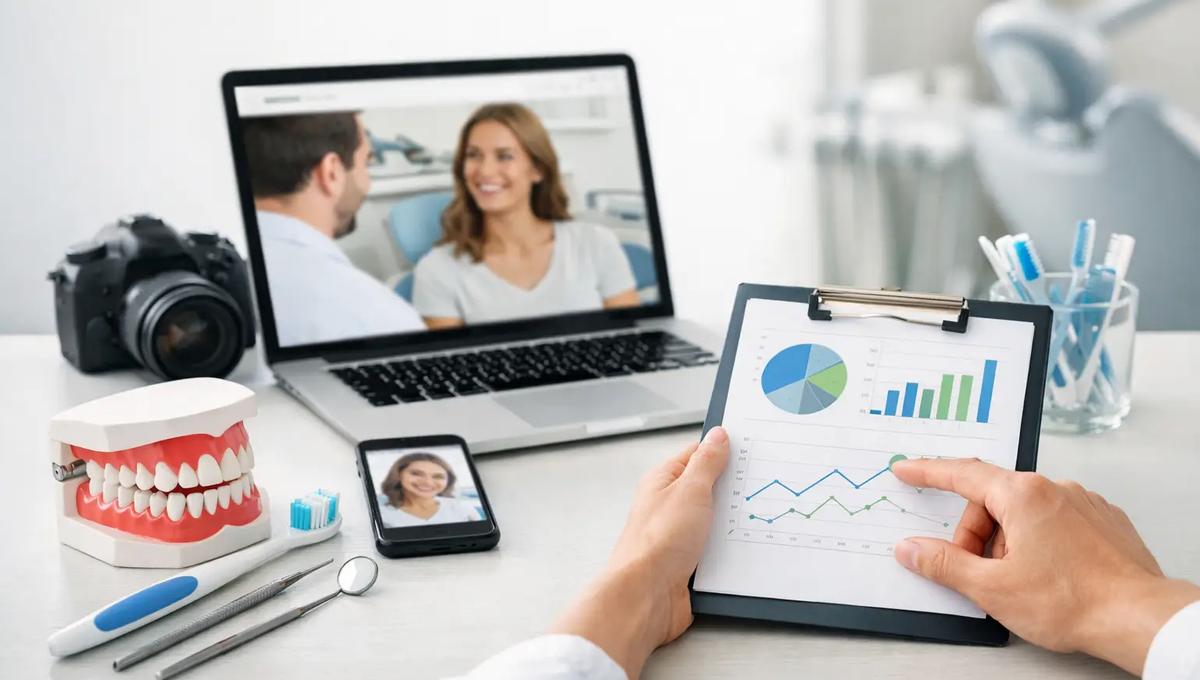
Most dental practices do not have a traffic problem. They have a case mix problem. The phones ring, hygiene stays busy, and yet implant or cosmetic consults come in inconsistently. That is why most lists of dental marketing ideas miss the point. If your goal is higher-value procedures, you do not need more random attention. You need a system that produces qualified consultation calls from patients already looking for treatment.
For implant and cosmetic clinics, the best marketing ideas are the ones tied directly to revenue. That means channels and offers that create demand now, filter out low-intent leads, and give your front desk something real to work with. Here are the ideas worth taking seriously if you want predictable growth instead of hoping referrals carry the month.
The best dental marketing ideas prioritize intent
Not all leads are equal, and not all marketing channels should be judged by the same standard. A smile makeover lead from a broad awareness campaign is not the same as a patient who searched for full mouth dental implants in your city and submitted a consult form. One is curious. The other is shopping.
That distinction matters because implant and cosmetic case acquisition is expensive to get wrong. If your marketing creates a pile of weak inquiries, your team burns time chasing people who were never serious. The right strategy is to focus first on channels that signal buying intent, then layer in creative and follow-up that improve conversion.
1. Build Google Ads around treatment-specific searches
If you want consults quickly, start with Google Ads. Patients searching for terms like dental implants near me, All-on-4 cost, or veneers consultation are already in-market. They are not browsing. They are evaluating providers.
The mistake many clinics make is running broad campaigns with generic keywords like dentist near me or cosmetic dentist. Those can generate volume, but they often bring lower-value patients, insurance shoppers, or people looking for routine care. A better setup is separate campaigns by procedure, separate landing pages by procedure, and ad copy built around that specific patient problem.
For implants, the message might center on missing teeth, fixed solutions, financing, and candidacy. For veneers, it might focus on smile design, before-and-after credibility, and consultation availability. Tighter alignment usually lowers wasted spend and improves lead quality.
2. Use Meta ads for demand creation, not random promotion
Meta can work extremely well for elective dentistry, but only if you respect what the platform is good at. Facebook and Instagram are not high-intent search channels. They are interruption channels. That means your creative has to do the heavy lifting.
The best-performing approach for many implant and cosmetic clinics is UGC-style content that feels like a patient conversation rather than a polished brand commercial. A clinician answering a common objection, a treatment coordinator explaining financing, or a patient talking through why they finally moved forward can outperform expensive, overproduced video.
This is one of the dental marketing ideas that gets stronger when the message is specific. Talking broadly about your practice is weak. Talking directly to people embarrassed to smile, frustrated with dentures, or delaying treatment because of cost is stronger. Specific pain points convert better than generic branding.
3. Stop sending paid traffic to your homepage
A homepage is not a sales page. It tries to do too many jobs at once, and paid traffic usually suffers because of it. If someone clicked an ad about dental implants, they should land on a page about implants. Not a page with general practice information, a team photo, and a menu of services.
A strong landing page needs a clear offer, proof, friction reduction, and one obvious next step. Show the procedure, explain who it is for, include outcomes patients care about, and make it easy to request a consult. Testimonials, before-and-after images, financing language, and urgency all help if used honestly.
Keep forms short. In most cases, name, phone, email, and one qualifying question are enough. Every extra field costs conversions.
4. Make your offer easier to say yes to
Many clinics market the procedure but ignore the offer. That is a missed opportunity. A patient may want implants or veneers, but still hesitate because the first step feels expensive, uncertain, or inconvenient.
A better offer lowers decision friction without cheapening the service. That could mean a complimentary implant consultation, a free smile assessment, financing options highlighted up front, or a limited-time second opinion visit for patients comparing providers. The point is not discounting your treatment plan. The point is making the first conversation easier to book.
Strong offers also help your ads stand out in crowded local markets. When several providers look similar, the one with the clearest next step often wins the lead.
5. Use before-and-after proof with real context
Before-and-after photos matter, but the photos alone are not always enough. Patients want to know what the case involved, how difficult it was, how long it took, and whether someone like them can get a similar result.
Add context wherever possible. Mention whether the patient had missing teeth, failing dental work, severe wear, or cosmetic concerns they had lived with for years. Explain the treatment path in simple language. This helps prospects self-identify and increases confidence before they ever speak with your team.
For cosmetic dentistry especially, proof is not optional. Patients buying elective treatment want to see aesthetic results, not just read claims.
6. Tighten your lead follow-up speed
A good campaign can still fail if your response process is slow. In implant and cosmetic marketing, speed matters more than most practices realize. The patient who filled out your form is often contacting multiple offices. If your team waits until the end of the day to call, you may already be out of the running.
Aim to contact new leads within minutes, not hours. Text plus call usually works better than email alone. Scripts should sound human, but they should also qualify quickly. Are they interested in implants, veneers, or a smile makeover? Are they looking soon? Have they been quoted before? You do not need a long interrogation. You do need clarity.
This is where many dental marketing ideas break down in the real world. The campaign gets blamed, but the leak is actually in lead handling.
7. Give your treatment coordinators better sales tools
Marketing does not stop at the lead form. The consult itself is part of the conversion system. If treatment coordinators are expected to close high-ticket cases, they need better tools than a clipboard and a generic financing sheet.
Give them patient stories, visual case examples, common objection responses, and a simple consult structure they can repeat consistently. For implants, confidence often rises when patients understand candidacy, timeline, sedation options, and payment pathways. For cosmetic cases, seeing similar outcomes helps reduce uncertainty.
Better marketing creates more opportunities. Better consult processes turn those opportunities into production.
8. Retarget people who did not book the first time
A lot of interested prospects do not convert on first touch. That does not mean they are bad leads. It usually means they need more time, more proof, or a better reason to act.
Retargeting is one of the simplest dental marketing ideas to implement, and one of the easiest to ignore. If someone visited your implant page, watched a treatment video, or clicked a smile makeover ad, keep showing up. Reinforce trust with testimonials, case results, financing reminders, and clear calls to book a consult.
This is especially useful for elective procedures with longer decision windows. Patients often need multiple touches before they commit.
9. Track consults, not vanity metrics
Clicks, impressions, and video views can be useful diagnostics, but they are not the scorecard. For an implant or cosmetic clinic, the real numbers are qualified leads, booked consults, show rates, starts, case value, and return on ad spend.
If a campaign produces fewer leads but more treatment starts, it may be better than the campaign with higher volume. The same applies at the keyword and creative level. What looks expensive on the surface can be highly profitable if the lead quality is stronger.
This is why specialized operators tend to outperform general agencies. They understand the economics behind the marketing, not just the platform settings. If you want a partner focused on consult volume and ROI rather than broad awareness, Booked.Dental is built for exactly that model.
10. Clean up your local search presence
Paid ads usually drive speed, but local visibility still matters. Your Google Business Profile, reviews, procedure pages, and local organic signals all shape patient trust. If your profile has weak review volume, poor photo quality, or inconsistent service messaging, it can drag down conversion even when ads are working.
Focus on review quality, not just count. Recent reviews mentioning implants, veneers, smile makeovers, or patient experience during major treatment carry more weight than generic praise. They help prospects believe you do this work every week, not once in a while.
11. Pick fewer channels and execute better
One of the biggest growth mistakes is trying everything at once. SEO, social posting, direct mail, sponsorships, video, TikTok, email, billboards, Google, Meta. It sounds diversified, but in practice it often spreads budget and attention too thin.
For most implant and cosmetic clinics, the smarter move is simple. Start with the channels closest to revenue. Usually that means Google Ads for high-intent demand and Meta for scalable demand generation and retargeting. Pair those with strong landing pages, fast follow-up, and a real consult process.
That is not flashy advice. It is practical advice. The clinics that win are usually not the ones doing the most marketing. They are the ones doing the few things that actually produce qualified consultation calls, then improving them every month.
If you are reviewing dental marketing ideas, judge each one by a hard question: will this help us book more profitable consults in the next 30 to 90 days? If the answer is vague, it probably belongs lower on the list.
Ready to check if your market is available?
Pick a time to confirm whether your city is still open. Booked.Dental works with only one implant or cosmetic clinic per local market.
Check Your Market