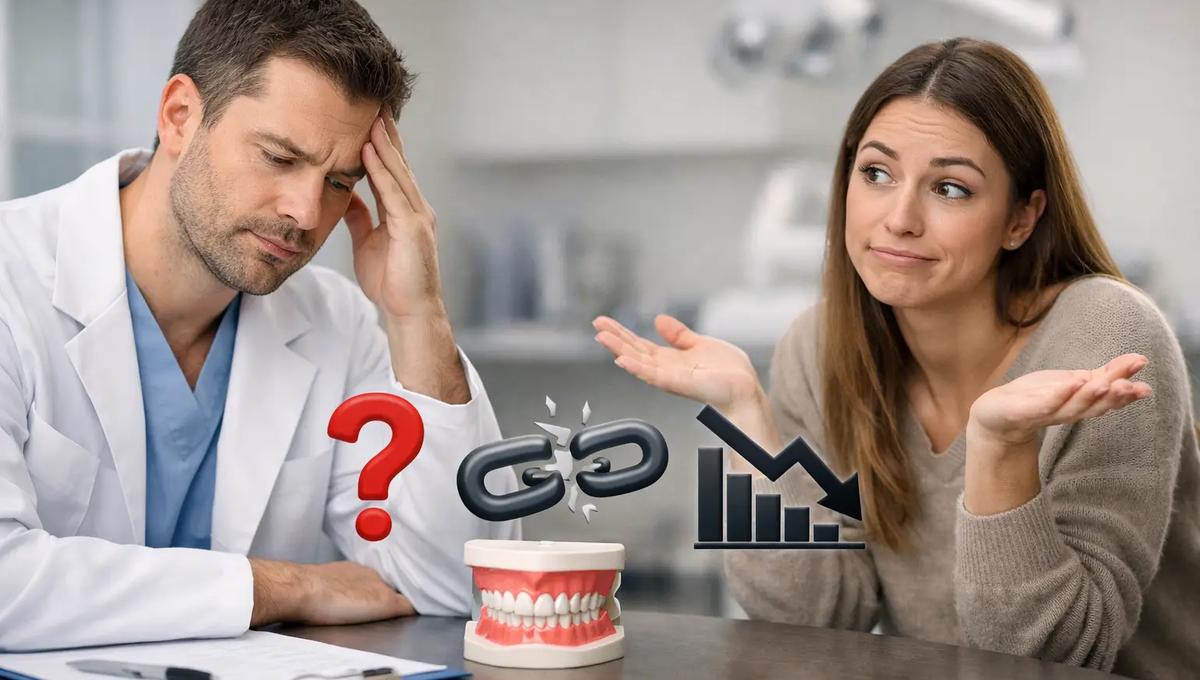
If your ad campaigns are producing form fills and phone calls but your schedule still looks thin, the problem usually is not lead volume. It is conversion. Dental leads not converting is one of the most expensive issues an implant or cosmetic practice can have because it hides in plain sight. On paper, the marketing looks active. In reality, the front-end system is leaking revenue before a consult ever happens.
For high-ticket dentistry, a lead is only valuable if it becomes a booked consultation and then a show-up. That means clinics need to stop asking, “How many leads did we get?” and start asking, “Where exactly are we losing qualified patients?”
Why dental leads not converting is usually a system problem
Most clinics assume poor conversion means the leads are bad. Sometimes that is true. A weak offer, broad targeting, or low-intent traffic from the wrong channel will absolutely drag down results. But many practices blame lead quality too early and ignore the bigger issue: the handoff between marketing and the front desk is broken.
Elective dental patients do not behave like emergency patients. They are comparing options, watching for signals of trust, and deciding whether your office feels worth the next step. If they submit a form and wait three hours for a callback, your cost per lead did not matter. You already lost.
This is especially true for implants and cosmetic cases. These patients are making a discretionary decision tied to money, confidence, and timing. They need fast contact, clear next steps, and a strong reason to book now. If any part of that chain is weak, lead conversion drops fast.
The five places clinics lose good leads
1. Slow response time
Speed matters more than most owners want to believe. A lead who inquires today is not the same lead tomorrow. Interest cools. Competitors call first. Spouses weigh in. Fear creeps back in.
If your office is responding in hours instead of minutes, conversion will suffer even if your ads are strong. The first contact window is where a large share of booked consults are won or lost. For Meta and Google leads, that window is short.
A practical benchmark is simple: if your team is not attempting contact immediately and repeatedly in the first hour, you are likely under-converting.
2. Weak intake scripting
A lot of front desks are trained to answer questions, not convert elective patients. That is a major difference.
When a lead says, “I was just looking for pricing,” the wrong response is to treat them like a price shopper and end the conversation. The right response is to move them toward the consultation by framing value, eligibility, financing options, and urgency.
Implant and cosmetic leads often come in unsure, cautious, or skeptical. The script cannot sound like a medical receptionist taking routine calls. It needs to sound like a team that knows how to book high-value treatment consultations.
3. The offer is attracting curiosity, not intent
Not all lead volume is equal. Some campaigns generate people who are only browsing. Others produce people ready to speak now.
If your ads promise something vague like “transform your smile” without qualifying the patient or framing the next step, you may get engagement without intent. If your landing page asks for too little commitment, you can end up paying for shallow inquiries.
This is why channel strategy matters. Meta can generate demand quickly, but the messaging has to pre-qualify. Google can capture active demand, but search terms and landing pages need to match the treatment and the market. Bad fit at the top creates conversion problems downstream.
4. No structured follow-up
Most leads do not book on the first attempt. That is normal. What is not normal is giving up after one call and one text.
Practices that convert at a high level have a real follow-up sequence. That means multiple calls, text touchpoints, voicemail drops, and tight timing over several days. It also means messaging that changes based on where the patient is stuck.
If your team has no follow-up cadence, no ownership, and no tracking, you are not really working the lead. You are hoping the patient does the heavy lifting.
5. The consultation is hard to say yes to
Sometimes the lead conversion issue is not before the appointment. It is the appointment itself.
If your consult process feels long, confusing, or financially vague, patients hesitate. If financing is brought up too late, case acceptance drops. If the doctor is strong clinically but the presentation feels loose, momentum dies.
Marketing can get the right person in the door. It cannot fix a consultation process that does not create confidence.
How to diagnose what is actually broken
The fastest way to solve low conversion is to stop treating all leads as one bucket. Break your numbers into stages.
Look at lead-to-contact rate, contact-to-booking rate, booking-to-show rate, and show-to-start rate. Then separate performance by source. Meta leads and Google leads should not be lumped together if you want clear answers.
For example, if contact rate is low, the issue is speed or follow-up. If contact rate is high but booking rate is weak, the issue is usually scripting, offer quality, or patient qualification. If bookings are strong but show rate is poor, your reminders and pre-appointment process need work. If patients show but do not accept treatment, the sales issue is inside the consult room.
Owners often jump straight to “the ads are bad” because that feels easy to identify. But conversion data usually tells a more specific story.
What better lead conversion actually looks like
A strong conversion setup is not complicated, but it is disciplined.
First, your ads need to pull in the right patient. For implants, that means messaging around candidacy, urgency, trust, and affordability. For cosmetic work, it means qualifying desire and budget without sounding sterile. The creative has to filter out casual attention and pull in people willing to take the next step.
Second, your intake process needs to act like a sales function. That does not mean hard-selling. It means your team knows how to handle hesitation, answer price questions without killing momentum, and confidently ask for the consult.
Third, the practice has to follow up like revenue depends on it, because it does. The clinics that consistently win are not always the clinics with the biggest budget. They are often the clinics that contact faster, persist longer, and make booking easier.
Fixes that move numbers fastest
If your dental leads are not converting, start with the changes that produce the biggest lift in the shortest time.
Tighten response time first. This alone can materially improve booked consults. Use instant text acknowledgement, same-minute call attempts, and clear assignment so no lead sits untouched.
Then review call handling. Listen to actual recordings. You will usually find avoidable losses fast: staff answering with low energy, over-explaining, quoting pricing too early, or failing to ask for the appointment directly.
Next, examine the offer and targeting. If too many leads are unqualified, the campaign needs better filtering. That may mean narrower geographic targeting, stronger ad copy, better treatment-specific landing pages, or a different hook altogether.
After that, build a follow-up sequence your team can actually execute. Fancy CRM automation is helpful, but consistency matters more than software. A basic, enforced process beats a complex one nobody uses.
Finally, tighten the consult experience. Patients should know what happens next, what financing paths exist, and why acting now makes sense. Uncertainty kills momentum.
When the problem is the marketing
There are times when lead quality really is the main issue. If your campaigns are generating low-intent names from people outside your treatment range, outside your budget profile, or outside your target area, no amount of front-desk effort will fully fix that.
That is why specialized dental advertising matters. Implant and cosmetic campaigns should be built around consultation economics, not vanity metrics. A lower cost per lead means nothing if the patients never book or never show.
This is where a focused partner can outperform a generalist. Agencies that understand elective dentistry tend to optimize for booked consults and case value, not just clicks and forms. At Booked.Dental, that is the point of the model: qualified consultation calls, fast time to first consult, and spend tied to ROI rather than generic activity.
The real question to ask your team
Instead of asking, “Why are our leads bad?” ask, “At what step are we losing profitable patients?” That question changes the conversation from blame to diagnosis.
Most practices do not need more random lead volume. They need better conversion from the interest they are already paying for. If you fix response speed, tighten intake, improve follow-up, and align the campaign with true treatment intent, the same ad spend can produce a very different outcome.
For implant and cosmetic clinics, that is the difference between marketing that looks busy and marketing that actually fills the schedule.
Ready to check if your market is available?
Pick a time to confirm whether your city is still open. Booked.Dental works with only one implant or cosmetic clinic per local market.
Check Your Market